
About All Tours Rafting ToursWaterfall ToursATV ToursFull Day ToursBike ToursFood ToursPrivate ToursKintamani ToursMonkey Forest ToursJungle Swing ToursTegallalang Rice Terrace Tours Directions Hours & Fees
Find Tours 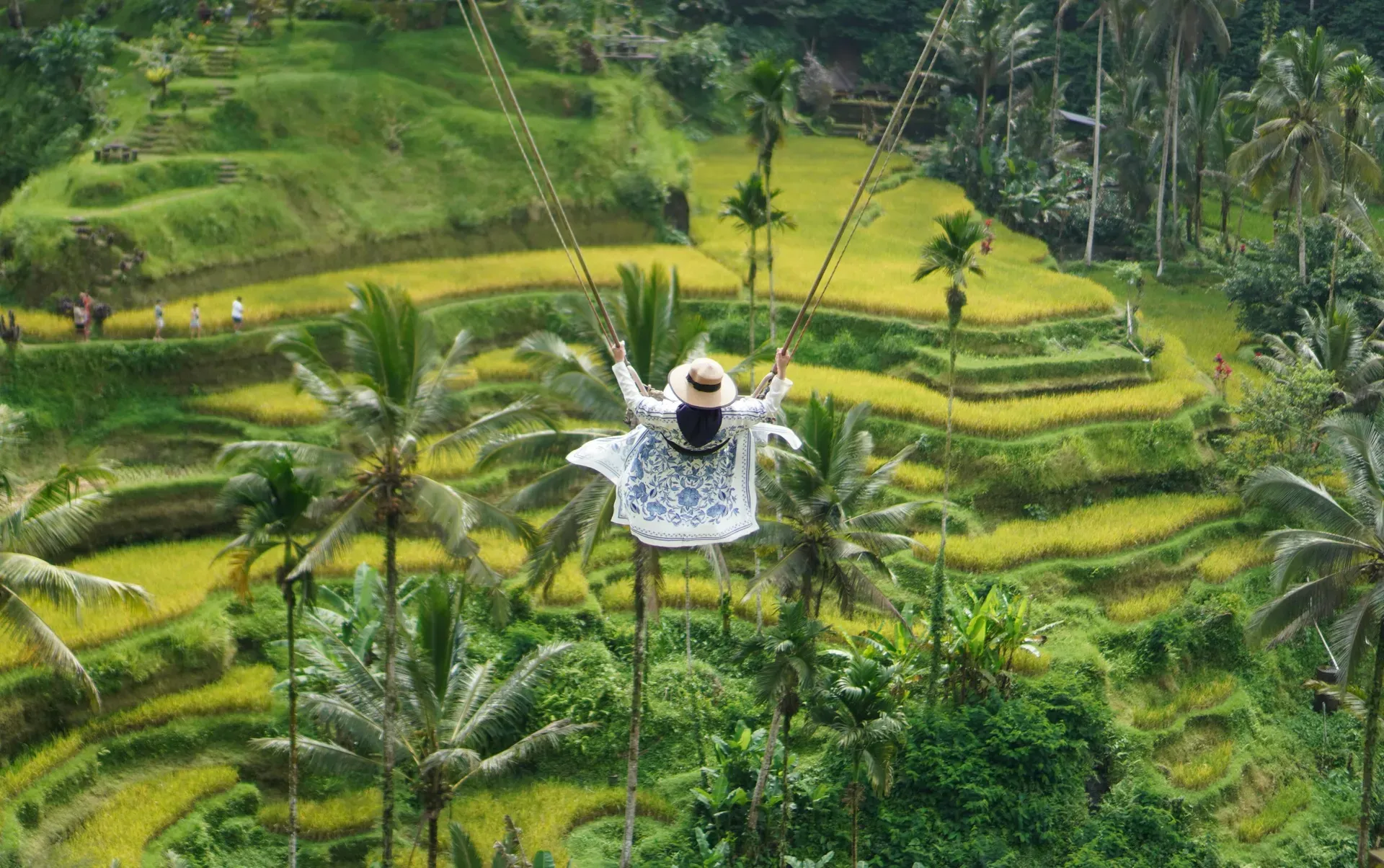
Ubud occupies 42.38 square kilometers of ravines and rainforests in central Bali's Gianyar Regency. The town functions as the island's inland center for traditional arts, holistic wellness, and Hindu temple architecture.
Central Bali's Gianyar Regency contains Ubud, a 42.38-square-kilometer district defined by steep ravines, terraced rice paddies, and hanging banyan trees. The Wos and Oos rivers converge directly in the town center. Unlike the coastal resorts 37 kilometers south, this inland administrative area sits at an elevation of 200 to 300 meters. The altitude drops the ambient temperature slightly but traps moisture, pushing humidity to 95 percent during the December and January rainy season.
Over three million foreign tourists arrive annually. They walk the two-kilometer Campuhan Ridge and navigate the UNESCO-listed Tegalalang rice terraces. Between 16:00 and 19:00 daily, traffic gridlock takes over Jalan Raya Ubud. Motorbikes idle bumper-to-bumper while pedestrians squeeze past parked cars on narrow, broken pavements. Outside of specific paved zones like the Sacred Monkey Forest, accessibility for wheelchairs or strollers remains poor. Travelers reach the district via a 1.5 to 2.5-hour drive from Ngurah Rai International Airport. Private transfers cost between 350,000 and 475,000 IDR. Operating from a designated lounge in the airport parking building, ride-hailing apps like Grab and Gojek offer fares around 300,000 IDR. Budget travelers take the Kura-Kura shuttle bus from Kuta for 100,000 IDR, though the trip takes up to four hours with multiple stops.
Navigating the local economy requires physical cash. Major restaurants and hotels accept credit cards, but Indonesian Rupiah is essential for local markets, small warungs, and temple entrance fees. To avoid common sleight-of-hand scams, visitors must use authorized money changers that display a green "No Commission" shield and a QR code from Bank Indonesia. Health and safety present real concerns in the tropics. Rabies remains present in Bali's animal populations. Avoid touching stray dogs or monkeys, and seek immediate medical attention if bitten. Piped tap water carries bacteria that cause gastrointestinal illness. Visitors must use bottled or filtered water even when brushing their teeth.
Before entering the district, visitors pay a mandatory 150,000 IDR Bali Tourist Levy. This fee funds local infrastructure and enforces a region-wide ban on single-use plastics, including bags, straws, and styrofoam. The dry season from April to October provides the safest conditions for exploring the steep terrain. Heavy tropical downpours in the winter months frequently cause localized flooding and trigger landslides on the northern roads. Check the weather radar before booking a private driver.
Javanese priest Rsi Markandya established the spiritual foundations of Ubud in the 8th century. He traveled from Java and meditated at the confluence of the Wos and Oos rivers in Campuhan. This specific site later became the Gunung Lebah Temple. Utilizing the dense jungle flora, the surrounding area developed into a center for natural medicine. The name Ubud originates from the Balinese word "ubad", meaning medicine.
For centuries, the town functioned as a quiet agricultural village ruled by regional royal families. Foreign influence drastically altered the town's trajectory in the 1930s. European artists Walter Spies and Rudolf Bonnet arrived and collaborated with the local royal family at Puri Saren Agung. In 1936, they co-founded the Pita Maha artists' association. This collective organized Balinese artists, introduced new materials like canvas and modern paints, and exhibited local works globally. The initiative transformed an isolated farming community into an international art exporter.
Tourism expanded rapidly in the late 20th century as backpackers discovered the central highlands. The publication of Elizabeth Gilbert's 2006 memoir Eat, Pray, Love triggered a massive influx of wellness-focused travelers. Yoga studios, meditation retreats, and vegan cafes replaced traditional warungs along Jalan Hanoman and Jalan Gootama. Leaving behind its agricultural roots, the local economy shifted almost entirely to hospitality.
Crisis forced the community to adapt multiple times. Following the 2002 Bali bombings, tourist numbers plummeted across the island, devastating local businesses. Local organizers launched the Ubud Writers and Readers Festival in 2004 to revive the economy. Every October, the event now draws thousands of attendees. Today, modern development clashes heavily with ancient infrastructure. The district's 74,800 residents share their 42 square kilometers with over three million annual visitors. Construction of new villas pushes deeper into the remaining rice paddies, threatening the 9th-century subak irrigation networks. Visitors wanting to see traditional farming methods must travel 20 minutes north to Tegalalang. Arrive before 08:00 to beat the diesel tour buses that fill the narrow access roads.
Steep river gorges dictate the physical layout of Ubud. The town sits on a volcanic plateau deeply cut by the Wos and Oos rivers. Supported by concrete pillars driven into the mud, buildings cling to the edges of 30-meter ravines. The Campuhan Ridge Walk follows a two-kilometer paved path directly along the spine of one such divide. Trekkers on this exposed ridge face direct sunlight, making the 06:00 sunrise the only practical time to walk it without risking heat exhaustion.
Traditional Balinese architecture dominates the central streets. The Ubud Royal Palace features red brick gates and intricately carved paras stone walls. Courtyards follow the Asta Kosala Kosali spatial rules, aligning structures toward Mount Agung. Just down the street, Pura Taman Saraswati centers around a massive lotus pond. Maintaining a centuries-old hydrological design, water flows from the temple's rear shrines directly into the pools. Ten minutes outside town, the 11th-century Goa Gajah features a menacing stone-carved face at its entrance and ancient bathing pools excavated in the 1950s.
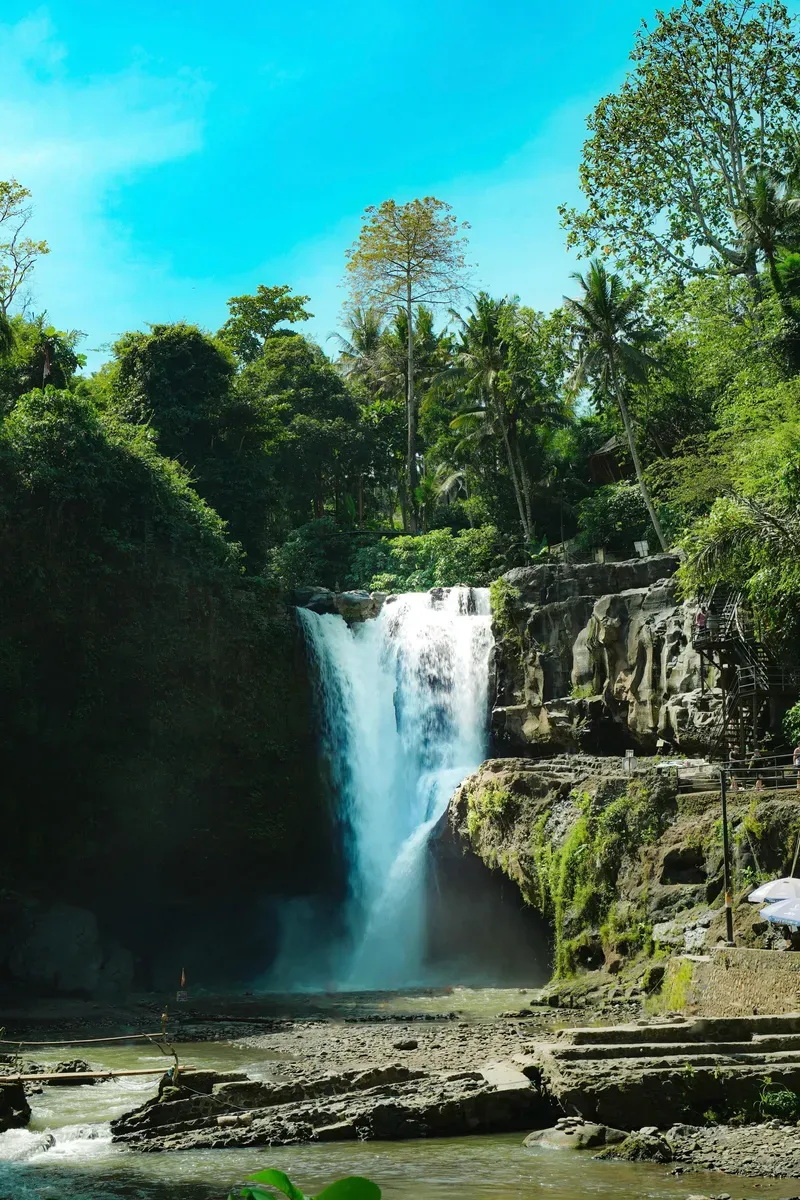
Water shapes the surrounding landscape just as much as the ravines. Tegenungan Waterfall drops heavily over a rocky ledge 30 minutes south of the town center. It stands as a highly accessible large waterfall, featuring a designated swimming area and multiple concrete viewing platforms. During the rainy season, the water turns brown from agricultural runoff. Further north, the 11th-century Gunung Kawi temple complex features ten rock-cut shrines carved directly into 7-meter-high sheltered niches in the cliff face. Visitors must descend 300 stone steps to reach the valley floor, making the return climb physically demanding in the midday heat. Carry 10,000 to 20,000 IDR in small notes to pay the local parking attendants at these sites.
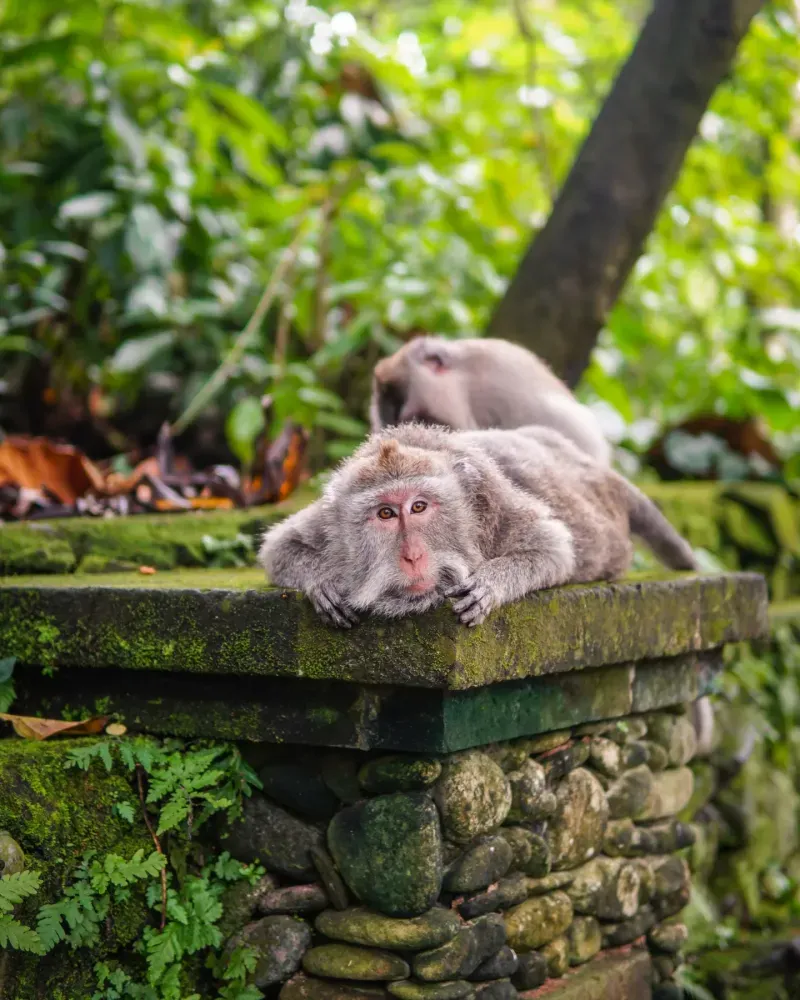
Nature reclaims any unmaintained structure in this high-humidity environment. The Sacred Monkey Forest Sanctuary covers 12.5 hectares of dense nutmeg forest right at the bottom of Jalan Monkey Forest. Over 1,260 long-tailed macaques occupy the canopy and three 14th-century temples within the grounds. Banyan tree roots swallow the stone bridges, and thick green moss covers the guardian statues. The monkeys aggressively target visitors carrying food or shiny objects. Leave plastic bags, water bottles, and loose sunglasses in your hotel room before buying the 130,000 IDR entry ticket.
Hindu rituals dictate the daily rhythm of Ubud. Women place canang sari—small woven palm-leaf baskets holding flowers, rice, and a burning incense stick—on the pavements, statues, and shop counters every morning. These offerings appease the spirits and require pedestrians to watch their step constantly. Stepping on an offering intentionally violates local laws and deeply offends residents.
Water purification holds specific religious weight here. At Tirta Empul Temple, 30 minutes outside the town center, locals and foreigners stand waist-deep in spring-fed pools. They wait in line to duck their heads under 13 sculpted stone spouts during the Melukat cleansing ritual. The water flows directly from the Pakerisan River. Strict rules govern temple entry. Menstruating women are legally and traditionally prohibited from entering the inner sanctums of any Hindu temple. All visitors must wear a sarong and sash to cover their knees and shoulders.
Performance art functions as religious observance rather than mere entertainment. Gamelan orchestras strike bronze metallophones and gongs in the courtyard of the Royal Palace every evening. Dancers perform the Legong and Barong epics, telling stories of good battling evil through sharp eye movements and bent-finger gestures. These public performances fund the maintenance of the village temples. Road closures happen frequently without warning. When a local banjar holds a cremation ceremony, large papier-mâché bulls and multi-tiered towers block the main intersections. Drivers must turn around and find another route.
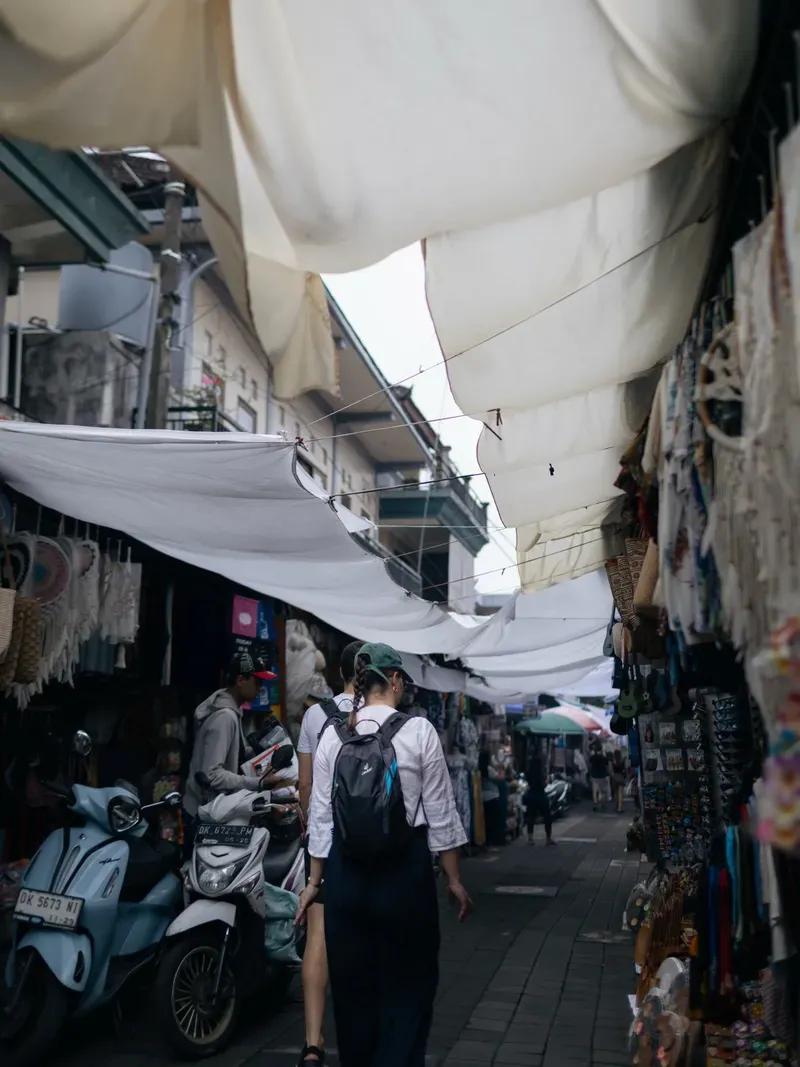
The local economy relies heavily on the production and sale of traditional crafts. The Ubud Art Market operates as the central commercial hub. The space splits its functions daily. Before 08:00, it serves as a fresh food market where locals buy produce, spices, and meat. By mid-morning, vendors replace the vegetables with woven rattan bags, silk scarves, and hand-carved wooden masks aimed at tourists. Haggling is expected, but aggressive bargaining over small amounts insults the vendors. The market sits directly opposite the Royal Palace, creating a bottleneck of pedestrians and scooters that lasts until sunset.
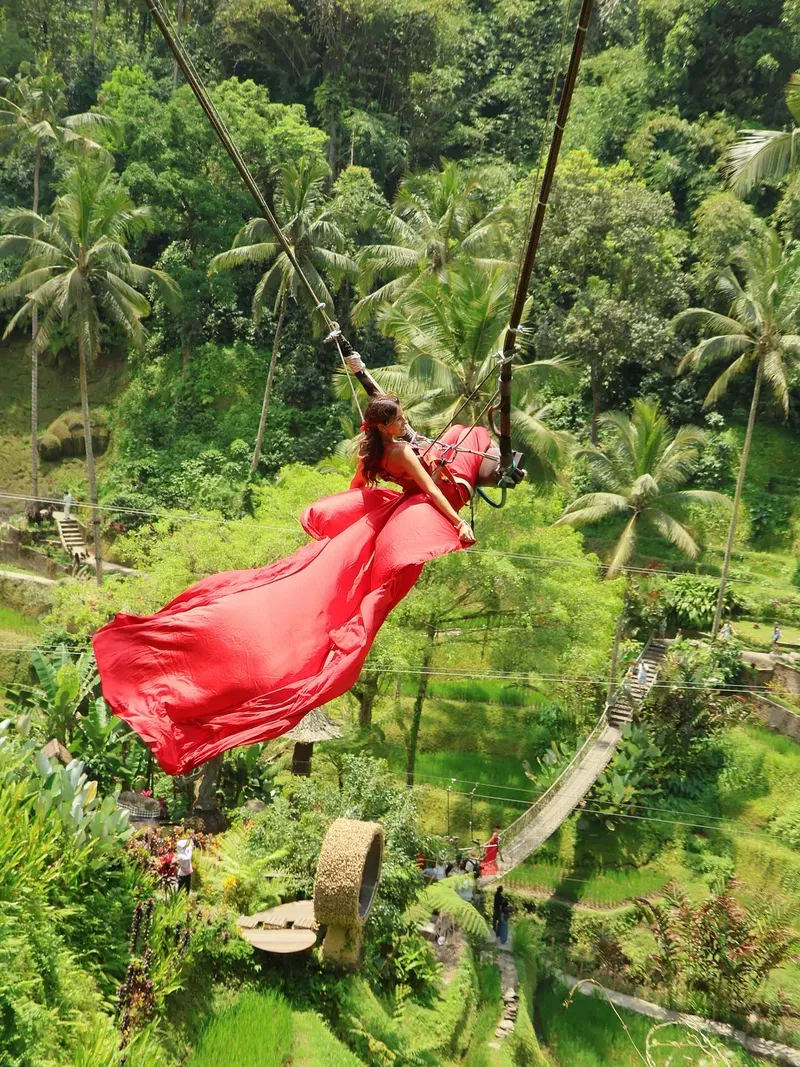
The name Ubud comes from the Balinese word ubad, which translates to medicine, referencing the area's historic abundance of medicinal plants.
The subak irrigation system visible in Tegalalang dates back to the 9th century and relies entirely on gravity to flood the rice terraces.
The Sacred Monkey Forest houses approximately 1,260 long-tailed macaques divided into seven distinct troops that fiercely defend their specific boundaries.
Most traditional statues and temple carvings in the district use paras, a soft volcanic tuff that quickly absorbs moisture and grows thick green moss.
Piped tap water in the district is not potable, requiring all residents and visitors to rely on filtered or bottled water to prevent gastrointestinal illness.
Temple guards enforce a mandatory dress code requiring both men and women to wear a sarong and sash to cover their knees and shoulders.
The district receives 2,428 millimeters of rain annually, significantly more than the southern coastal areas of Bali.
No, Ubud sits in the central highlands of Bali. The nearest beaches are located in Sanur or Keramas, which require a 45 to 60-minute car ride depending on traffic.
Adult tickets cost 130,000 IDR, while children ages 3 to 12 pay 100,000 IDR. Visitors purchase tickets at the main entrance gates on Jalan Monkey Forest.
The Bali Tourist Levy is a mandatory 150,000 IDR fee applied to all international visitors. You must pay this fee online via the official Love Bali portal before arriving.
Ngurah Rai International Airport is 37 kilometers south of the town center. The drive takes between 1.5 and 2.5 hours due to heavy traffic through Denpasar.
December and January bring the heaviest rainfall and humidity levels up to 95 percent. These tropical downpours frequently cause localized flooding and make steep paths slippery.
Tap water is not safe for consumption. You must use bottled or filtered water for drinking and brushing your teeth to avoid contracting waterborne illnesses.
Pavements in the town center are narrow, uneven, and frequently broken. The Sacred Monkey Forest offers some paved paths, but overall accessibility for wheelchairs remains poor.
Tipping is not legally required. Most established restaurants automatically add a 5 to 10 percent service charge to the final bill.
You must cover your shoulders and knees to enter any sacred site. A traditional sarong and waist sash are mandatory and usually available to rent at the temple entrance.
The macaques can become aggressive if they see or smell food. They frequently snatch loose items like sunglasses, phones, and water bottles from distracted tourists.
Browse verified tours with free cancellation and instant confirmation.
Find Tours