
About All Tours Rafting ToursWaterfall ToursATV ToursFull Day ToursBike ToursFood ToursPrivate ToursKintamani ToursMonkey Forest ToursJungle Swing ToursTegallalang Rice Terrace Tours Directions Hours & Fees
Find Tours 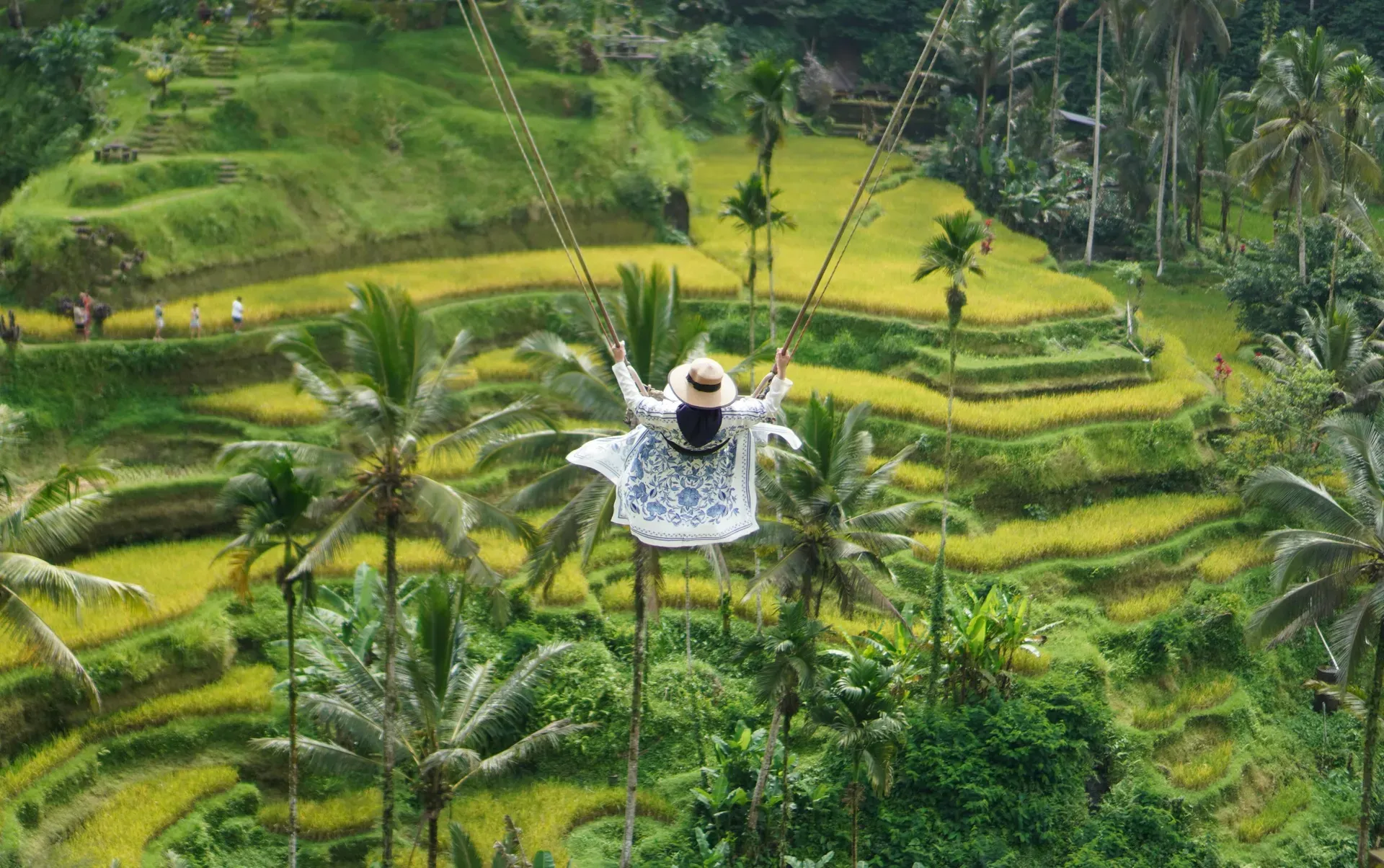
Situated 200 to 300 meters above sea level, Ubud serves as an inland center for traditional Balinese arts surrounded by terraced rice paddies and steep river ravines. Travelers come to explore 8th-century Hindu water temples, walk the 2-kilometer Campuhan Ridge, and observe approximately 1,260 long-tailed macaques inside a 12.5-hectare nature reserve.
Find Guided ToursUbud is an inland town located in the central foothills of Bali's Gianyar Regency. Covering an administrative area of 42.38 square kilometers, it sits at an elevation of 200 to 300 meters above sea level, providing a slightly cooler climate than the coastal regions. The landscape features steep ravines, hanging banyan trees, and the convergence of the Wos and Oos rivers in the center of town. Today, the district supports a population of 74,800 people and receives over three million foreign tourists annually.
Regarded as the cultural and spiritual center of the island, the town contrasts sharply with Bali's southern beach destinations. It serves as a major hub for traditional Balinese arts, dance, and holistic wellness practices like yoga and meditation. The surrounding environment is defined by dense rainforests and terraced rice paddies. The area gained significant global recognition following the publication and film adaptation of Elizabeth Gilbert's memoir 'Eat, Pray, Love'.
The spiritual foundations of the settlement date back to the 8th century, when the Javanese priest Rsi Markandya meditated at the confluence of the two rivers in Campuhan. It eventually became the seat of one of Bali's royal families. The historical residence of the local ruling family, Puri Saren Agung, remains a central landmark where classical Balinese architecture is preserved.
During the 1930s, the town evolved into an international art center. Foreign artists Walter Spies and Rudolf Bonnet arrived and co-founded the 'Pita Maha' artists' association in 1936. Decades later, following the 2002 Bali bombings, the community established the Ubud Writers and Readers Festival to help revive the local tourism economy.
Discover the full history and cultural significance on our About page.
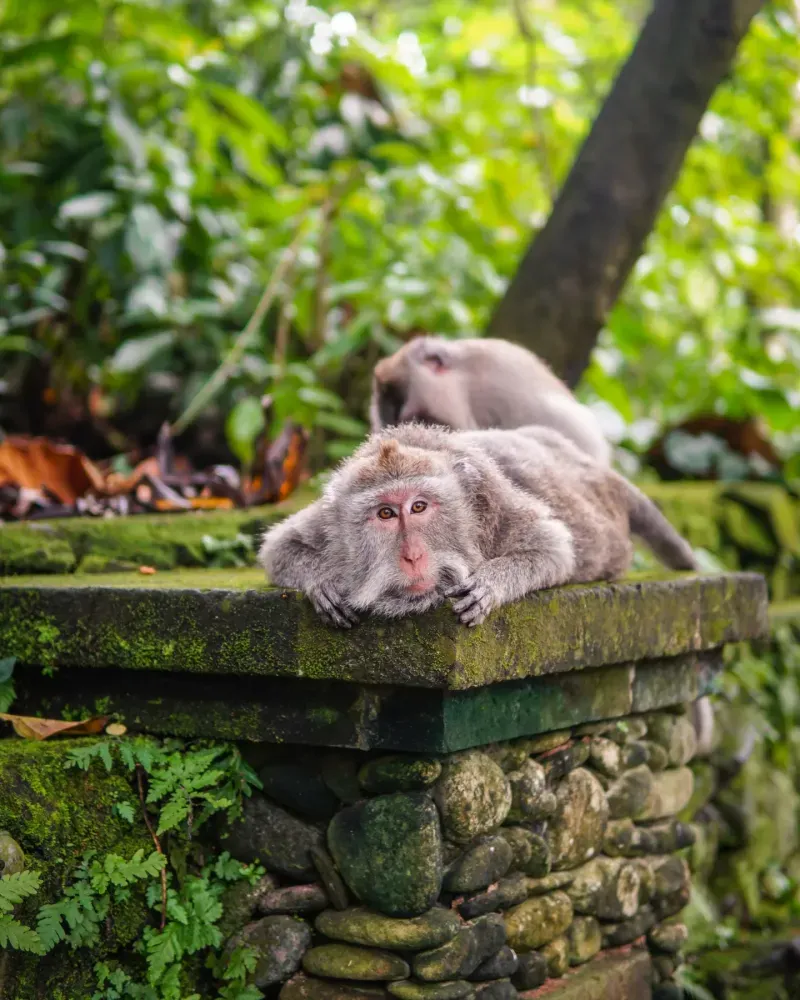
Walk through a 12.5-hectare nature reserve that serves as home to approximately 1,260 long-tailed macaques. The sanctuary contains three 14th-century temples hidden among the foliage. Remove loose items like sunglasses before entering, as the resident monkeys are highly skilled at snatching them from visitors.
Follow this 2-kilometer paved trek situated between two river valleys. Arriving at 06:00 helps avoid the intense midday heat and largest crowds. The early morning light provides clear views of Mount Agung in the distance, while the path offers a quiet alternative to gridlocked central Ubud traffic.
Participate in a traditional 'Melukat' purification ritual at this holy water temple. Visitors enter the sacred spring pools to bathe under a series of water spouts. Modest clothing is strictly enforced. You must wear a mandatory sarong and sash to access these sacred temple grounds.
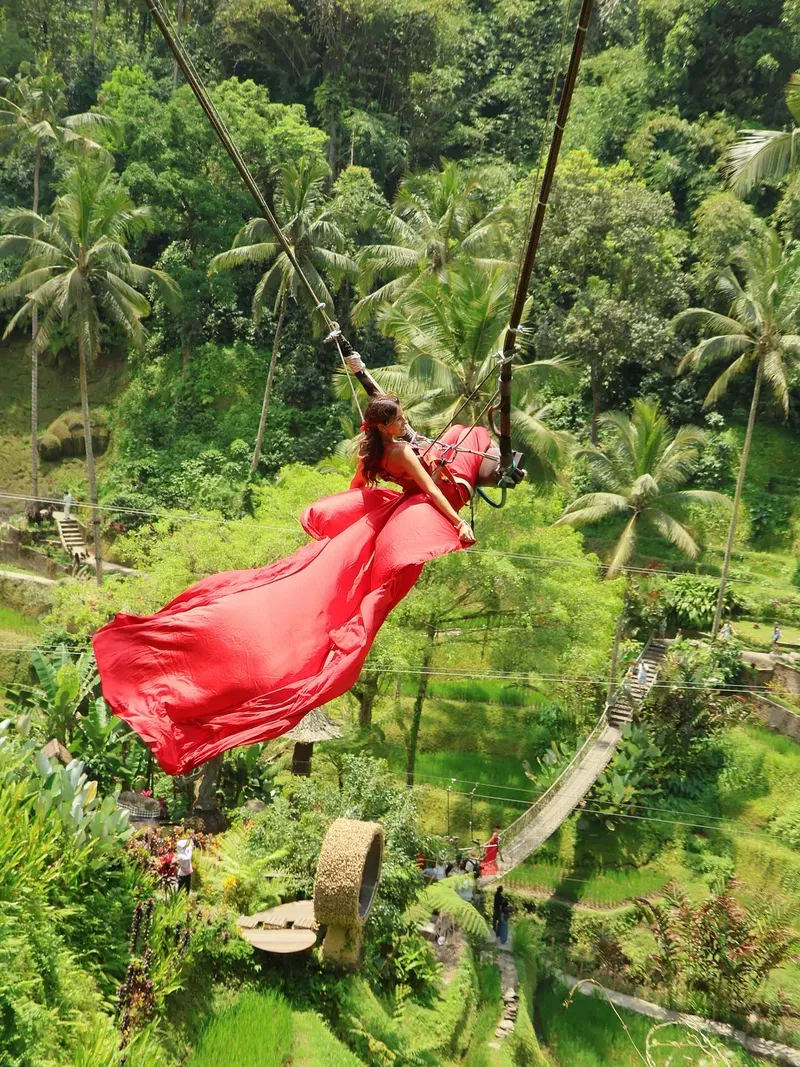
Observe traditional subak irrigation systems at these UNESCO-listed agricultural landscapes. The steep terrain features layered rice paddies and large jungle swings. Because walking distances are significant and rainy season humidity can reach 95 percent, visiting between April and October provides the best conditions for outdoor trekking.
Hand-picked tours with free cancellation and verified reviews
 Free Cancellation 10h
  Free Cancellation
  Free Cancellation
  Free Cancellation 10h
  Free Cancellation
  Free Cancellation
  Free Cancellation 3h
  Free Cancellation
 The ideal time to visit Ubud is between April and October during the dry season. These months provide sunny days and lower humidity, creating optimal conditions for outdoor trekking and exploring temple complexes.
April and May fall within the highly recommended dry season, offering sunny days and manageable humidity. March transitions out of the rainy period, meaning some late showers remain possible.
This period sits firmly in the dry season. Expect consistent sunny weather and lower humidity, making it the premier time for walking the Campuhan Ridge or visiting rice terraces.
September and October offer excellent dry season conditions, with the Ubud Writers Festival occurring in October. November marks the start of the rainy season, increasing the likelihood of downpours.
These months represent the peak of the rainy season. Visitors will encounter heavy tropical downpours, humidity reaching up to 95 percent, and elevated risks of localized flooding and landslides.
Operating hours in Ubud vary depending on the specific site. Most major attractions, including the Sacred Monkey Forest, are open daily from 09:00 to 18:00. The Ubud Water Palace operates daily from 08:00 to 19:00, and extends its hours until 21:30 on Fridays.
| Category | Price |
|---|---|
| Bali Tourist Levy (Mandatory for International Visitors) | 150,000 IDR |
| Visa on Arrival (VoA) | 500,000 IDR |
| Sacred Monkey Forest - Adult (As of April 2026) | 130,000 IDR |
| Sacred Monkey Forest - Child ages 3-12 (As of April 2026) | 100,000 IDR |
International tourists are required to pay the Bali Tourist Levy via the official 'Love Bali' portal. Although major establishments accept credit cards, visitors must carry cash in Indonesian Rupiah (IDR) to pay for local temple entrance fees and standard parking charges of 10,000 to 20,000 IDR.
For complete schedules and ticket prices, visit our Hours & Fees page.
Ubud sits 37 kilometers from Ngurah Rai International Airport in Bali's central highlands. Travelers can reach the district using private airport transfers, local ride-hailing applications, or public shuttle buses.
📍 Central foothills, Gianyar Regency, Bali, Indonesia
Booking a private transfer is the most reliable way to travel the 37 kilometers from Ngurah Rai International Airport. Drivers will meet passengers directly at the arrival gate holding a customized name sign. This eliminates the need to navigate the busy terminals while carrying luggage. The drive inland takes up to two and a half hours.
Visitors can use local ride-hailing applications like Grab and Gojek for the 37-kilometer trip from the airport. Passengers must walk approximately 500 meters to reach the designated Online Taxi Lounge. This pickup point is located inside the main airport parking building. Fares fluctuate based on demand but generally cap at 500,000 IDR.
The Kura-Kura Bus provides the cheapest public transit route to Ubud. It departs from the DFS Bus Bay in the Kuta and Seminyak area, covering a distance of roughly 30 kilometers. The shuttle makes multiple stops along the route. It ultimately drops passengers at a central hub rather than delivering them to specific hotels.
Hiring a private driver is a practical choice when traveling the 30 kilometers from Seminyak or Canggu. The route passes directly through the busy districts of Denpasar and Batubulan. Heavy traffic in these areas significantly impacts total travel time. Visitors should expect the drive to take up to two hours during peak periods.
For detailed transport options and routes, visit our Directions page.
Major restaurants accept credit cards, but cash is essential for markets and the 10,000 to 20,000 IDR parking fees at temples. Only use authorized money changers displaying a green 'No Commission' shield and a Bank Indonesia QR code. This helps you avoid common short-changing scams.
All temple entries require modest clothing covering your shoulders and knees, along with a mandatory sarong and sash. Be aware of unofficial guides at sites like Tirta Empul who demand high fees for tours. Additionally, local laws traditionally prohibit menstruating women from entering inner temple sanctums.
The Sacred Monkey Forest Sanctuary houses roughly 1,260 long-tailed macaques. These animals are highly skilled at snatching loose items from visitors and strollers. Remove sunglasses, hats, and jewelry before entering, and never bring snacks or plastic bags, which can provoke aggressive behavior.
Central Ubud traffic along Jalan Raya Ubud frequently reaches complete gridlock between 16:00 and 19:00 daily. Download the Grab or Gojek apps to hire transparently priced motorbike taxis that can bypass this congestion. Alternatively, you can rent a scooter for 75,000 to 100,000 IDR per day.
The local tap water is not potable and carries a high risk of causing 'Bali Belly'. Always use bottled or filtered water, even when brushing your teeth. Since Bali strictly bans single-use plastics, bring a reusable bottle to refill at your hotel or local cafes.
Plan outdoor activities like the 2-kilometer Campuhan Ridge Walk for 06:00. This early start helps you avoid both the intense midday sun and the largest tourist crowds. During the peak rainy season in December and January, humidity can reach 95 percent, making steep terrain highly challenging.
Goa Gajah is an 11th-century archaeological site located just outside central Ubud. Visitors come to see the intricate stone-carved cave entrance and the site's ancient bathing pools.
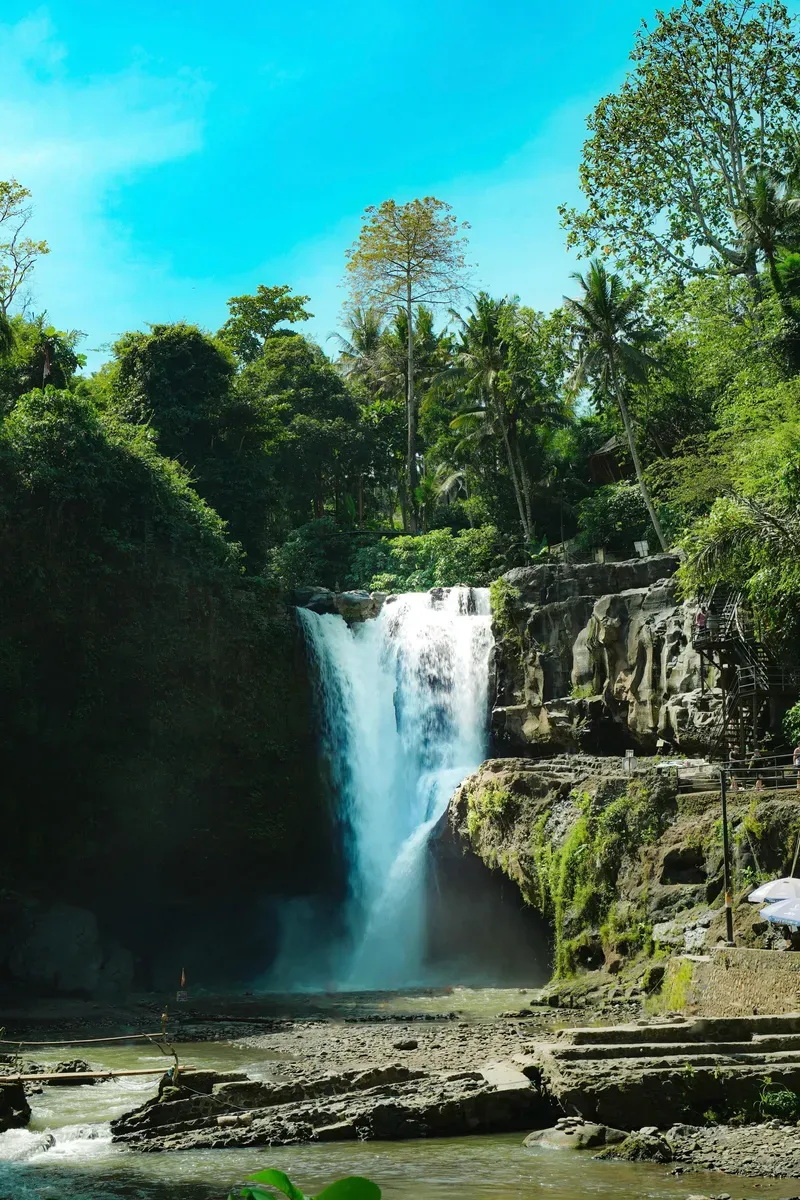
Tegenungan is one of the most accessible large waterfalls in the region. The site features a designated swimming area and multiple viewing platforms for clear sightlines of the falls.
This 11th-century temple complex contains ten rock-cut shrines known as candi. The structures are carved directly into 7-meter-high sheltered niches along the river valley.
Read what travelers share about their experience visiting Ubud — from practical tips to personal highlights.


Ubud is 37 kilometers from Ngurah Rai International Airport, taking 1.5 to 2.5 hours depending on traffic. The most reliable option is a private transfer costing 350,000 to 475,000 IDR. You can also use ride-hailing apps like Grab or Gojek for 300,000 to 500,000 IDR, or take the Kura-Kura Bus for 100,000 IDR.
The optimal time to visit is during the dry season from April to October. These months offer sunny days and lower humidity, making conditions ideal for outdoor trekking and temple visits. Avoid December and January, as high humidity up to 95% and heavy tropical downpours can cause localized flooding.
International visitors must first pay a mandatory 150,000 IDR Bali Tourist Levy via the Love Bali portal. Individual attractions have their own fees, such as the Sacred Monkey Forest, which costs 130,000 IDR for adults and 100,000 IDR for children ages 3 to 12. Remember to carry small cash amounts of 10,000 to 20,000 IDR for parking at temples and waterfalls.
Always carry bottled or filtered water, as tap water is not safe to drink and can cause illness. Bring 10,000 to 20,000 IDR in cash for parking fees, along with a mandatory sarong and sash for temple entry. Leave single-use plastics and snacks behind, especially near the 1,260 macaques at the Monkey Forest.
Accessibility in Ubud is generally poor due to narrow, uneven, and broken pavements. The Sacred Monkey Forest has some paved paths that are partially accessible, but the ticket office requires navigating steps. For those with limited mobility, hiring a private driver for approximately 600,000 IDR per day is highly recommended to minimize walking.
The average visit duration is 3 to 4 days. Most major attractions, including the Sacred Monkey Forest, are open daily from 09:00 to 18:00. The Ubud Water Palace operates from 08:00 to 19:00, staying open until 21:30 on Fridays for traditional dance performances.
Renting a scooter for 75,000 to 100,000 IDR per day is a common way to bypass heavy traffic, which often gridlocks central Ubud between 16:00 and 19:00. Alternatively, hiring a private driver costs about 600,000 IDR per day. Ride-hailing apps like Grab and Gojek offer transparently priced motorbike taxis for shorter trips.
You should book popular restaurants like Locavore or Hujan Locale at least 1 to 2 weeks in advance during the peak season. International visitors also need to secure a 500,000 IDR Visa on Arrival and pay the 150,000 IDR tourist levy online before arriving. For local tours, beware of unofficial guides at temples who may demand high fees for mandatory tours.
Browse verified tours with free cancellation and instant confirmation.
Find Tours